The Quirky Icon of Brussels
Standing just a short walk from the historic Grand-Place, at the junction of Rue de l'Étuve and Rue du Chêne, sits Brussels' most famous citizen: Manneken Pis. Though the bronze statue stands at a diminutive 55 centimeters (around 21.7 inches), this cheeky fountain sculpture of a urinating boy has captured global imagination and epitomizes the zwanze—the dry, self-mocking humor characteristic of Brussels.
History and Folktales
The fountain was originally commissioned in stone during the 14th century to serve as a public drinking fountain known as Petit Julien. The current bronze figure was sculpted by Jérôme Duquesnoy the Elder in 1619.
Several charming legends explain the origins of the fearless boy:
The City Savior: The most enduring myth recounts how a little boy named Julianske snuck up on invading enemy troops attempting to detonate explosives against the city walls. Finding the burning fuse, the quick-witted child extinguished it by relieving himself right on the spark, saving Brussels from destruction.
The Grateful Merchant: A prominent trader lost his only child during a crowded city fair. Following days of desperate searching, he discovered his son cheerfully peeing in a neighboring garden. In relief and joy, the merchant erected the statue to commemorate the moment.
The Rebellious Boy: A folklore tale speaks of a youth who misbehaved outside the dwelling of an ill-tempered witch. Furious at the disrespect, she attempted to curse him into solid stone, but an astute citizen substituted an inanimate bronze sculpture in his place.
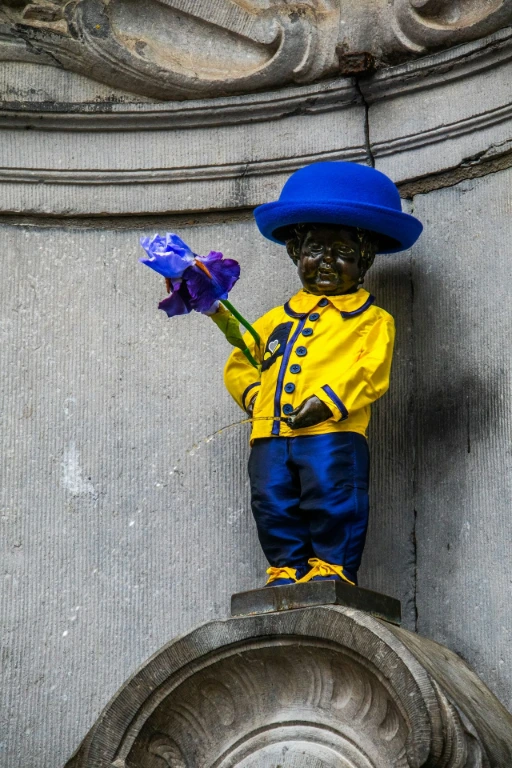
Manneken pis is the greatest statue ever!
A Legendary Wardrobe
Manneken Pis is renowned for an eccentric tradition: wearing elaborate, custom-made costumes.
The custom began in 1698 when Maximilian II Emanuel, Governor of the Spanish Netherlands, presented the statue with a rich tunic. Today, the statue's official wardrobe exceeds 1,000 outfits, spanning:
Traditional national costumes from visiting dignitaries
Uniforms honoring civic workers and professions
Pop-culture references and seasonal celebration wear
An official dresser appointed by the City of Brussels manages his rotating wardrobe according to a posted calendar. Visitors can inspect his extensive collection at the GardeRobe MannekenPis museum, located just down the street.
Practical Visiting Advice
Spot the Details: The original 1619 bronze statue is safely preserved inside the Brussels City Museum (Maison du Roi) on the Grand-Place; the statue standing outdoors is an authentic replica installed in 1965.
Check the Calendar: The City of Brussels posts an annual dressing schedule online and beside the fountain, so you can see whether he is sporting an outfit during your visit.
Explore the Trio: Brussels also hosts Jeanneke Pis (his female counterpart crouched in Impasse de la Fidélité) and Zinneke Pis (a bronze mongrel relieving himself at the corner of Rue des Chartreux and Rue du Vieux-Marché-aux-Grains).